
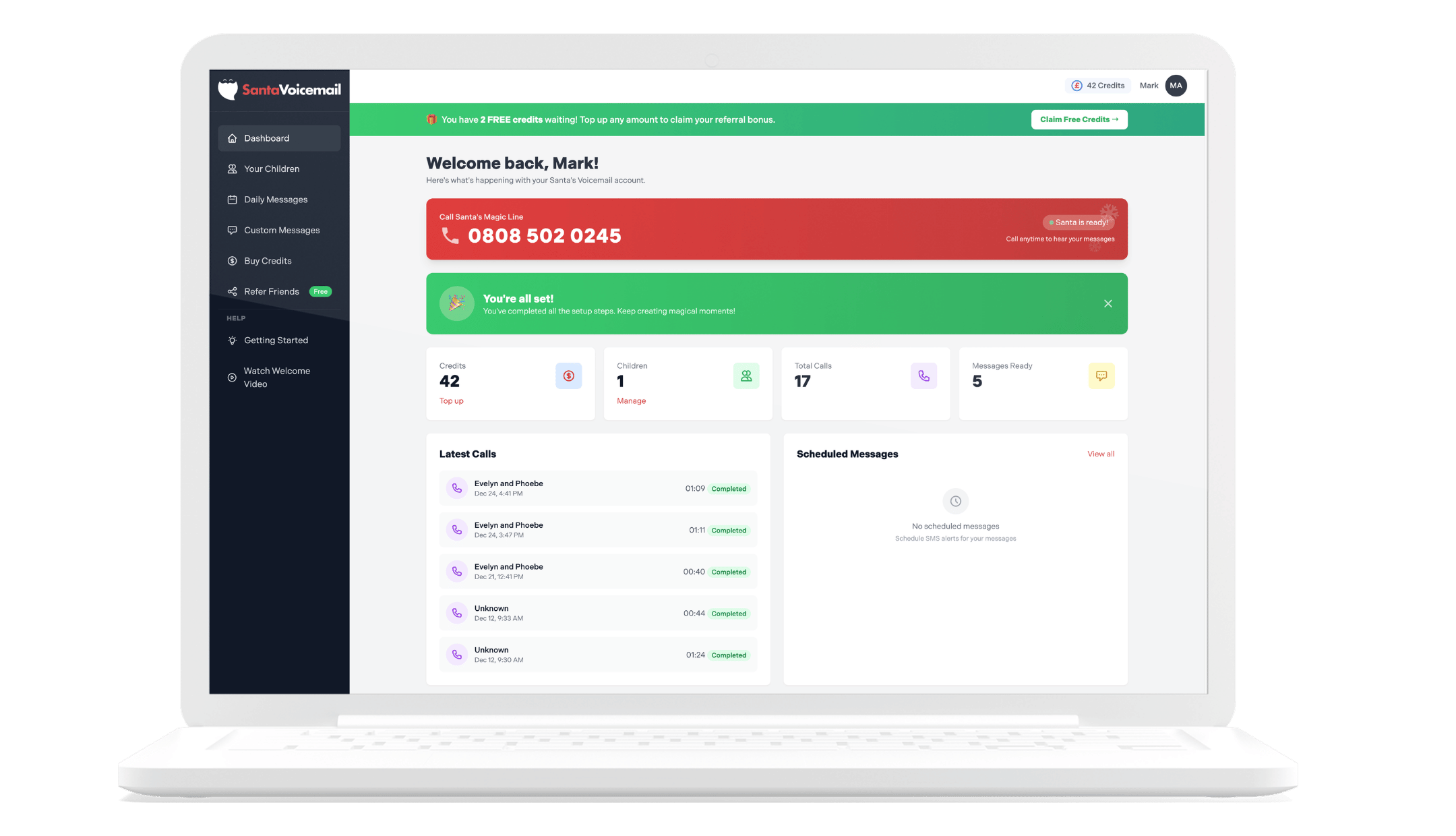
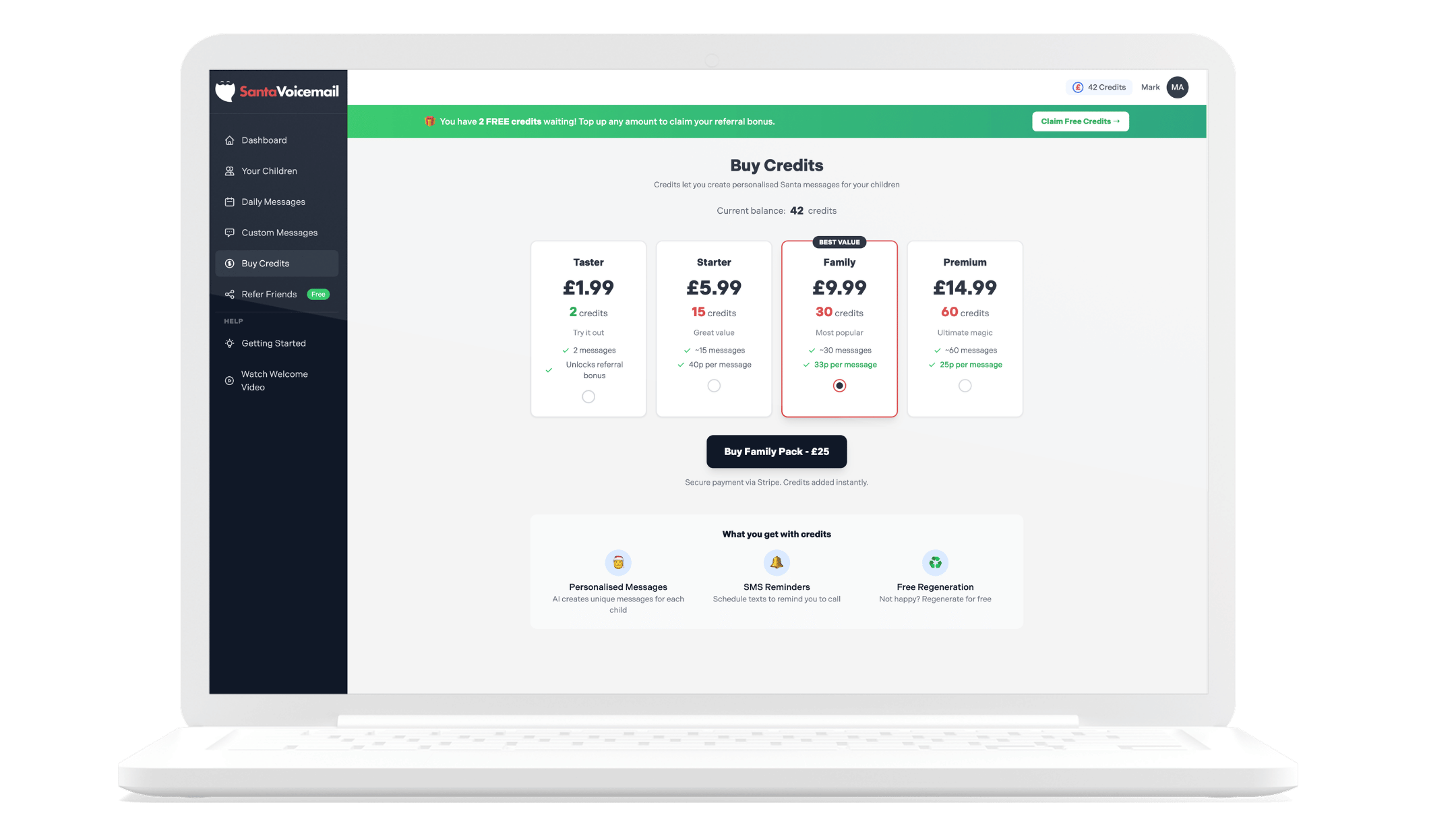
There are moments in childhood that parents would do anything to make feel real. SantaCall delivers one of them: a genuine phone call from Santa, scheduled for exactly the right moment and personalised to the child receiving it.
Parents can book a SantaCall directly through the website, or it can be arranged as part of a SantaBooker visit. Either way, the experience is built around the details that make it feel authentic. Before the call arrives, the family receives an SMS notification so nobody misses it. When the phone rings, Santa is ready.
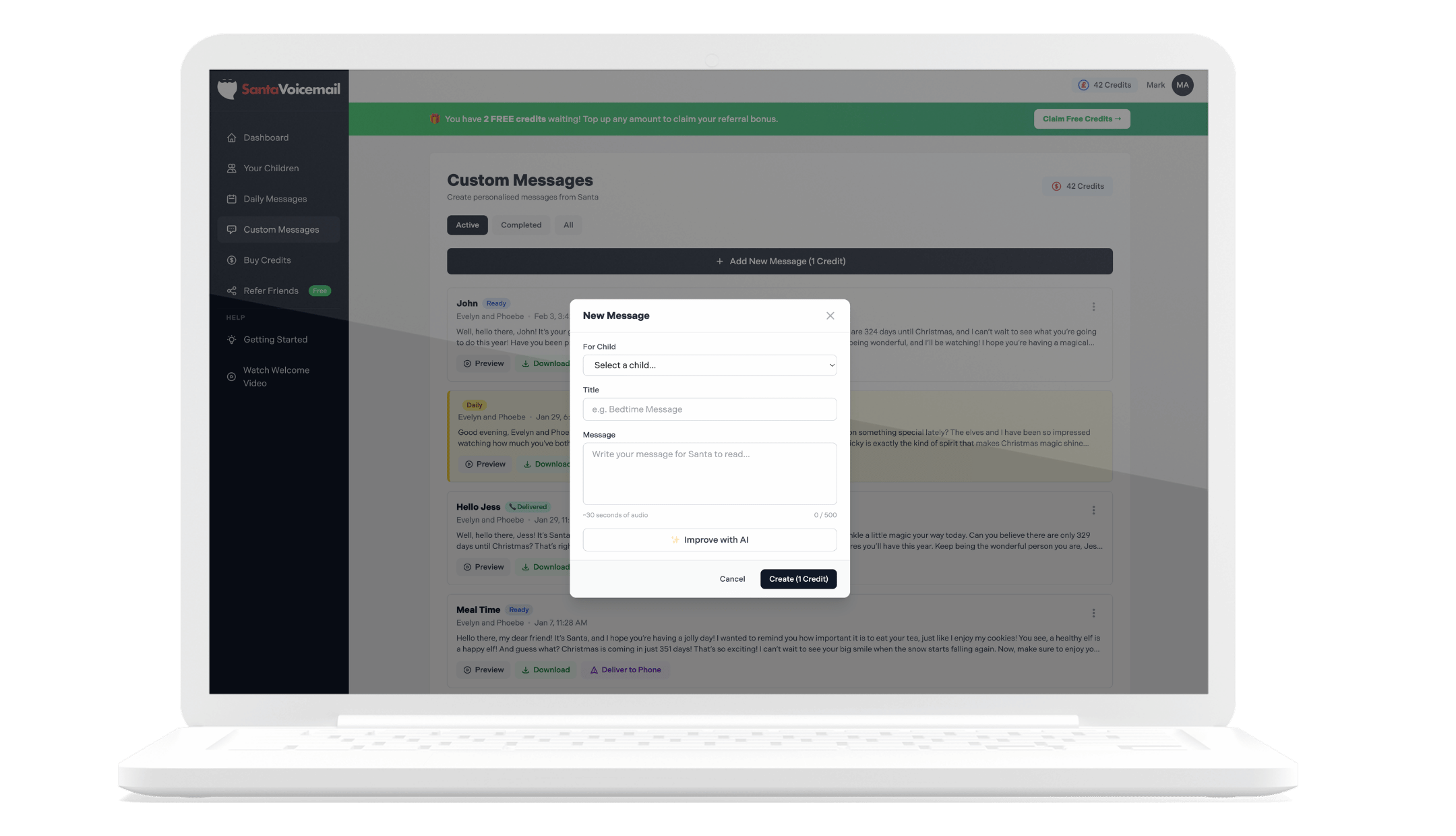
Every call is fully customisable. Parents can write the message themselves, or let the AI generate one based on the information they have provided. For families who book a series of calls, a Christmas countdown is woven into each one, and the message is never repeated. Every call Santa makes to that child is different, keeping the magic consistent right through to Christmas Eve.
The AI behind SantaCall does more than fill a template. It produces natural, conversational calls that respond to what parents have shared about their child, from their name and age through to the things they are hoping to find under the tree. The result is a call that feels personal because the information behind it is.
SantaCall works as a standalone product and as part of the wider SantaBooker ecosystem, making it straightforward to offer scheduled calls as an add-on to a grotto visit or as a product in its own right.
Under the Hood
SantaCall is hosted on AWS, with the scheduling engine, SMS notification system, and AI message generation running as separate, independently managed processes. Keeping these components apart means that a surge in one area does not put pressure on the others. Delivery timing is central to what SantaCall does, and the infrastructure is built around that requirement.
Personal data is encrypted in transit and at rest, with clearly defined retention limits that apply once a call has been delivered. Access controls run through every stage of the workflow, and the AI layer connects via a secure, authenticated API. The platform undergoes regular penetration testing, which covers both the scheduling infrastructure and the data it processes.
The scheduling engine is built with resilience in mind. Retry logic and delivery confirmation are included as standard, so a missed first attempt does not mean a missed call. Every message in a scheduled sequence is generated fresh, and the system is designed never to repeat itself across the calls a child receives.