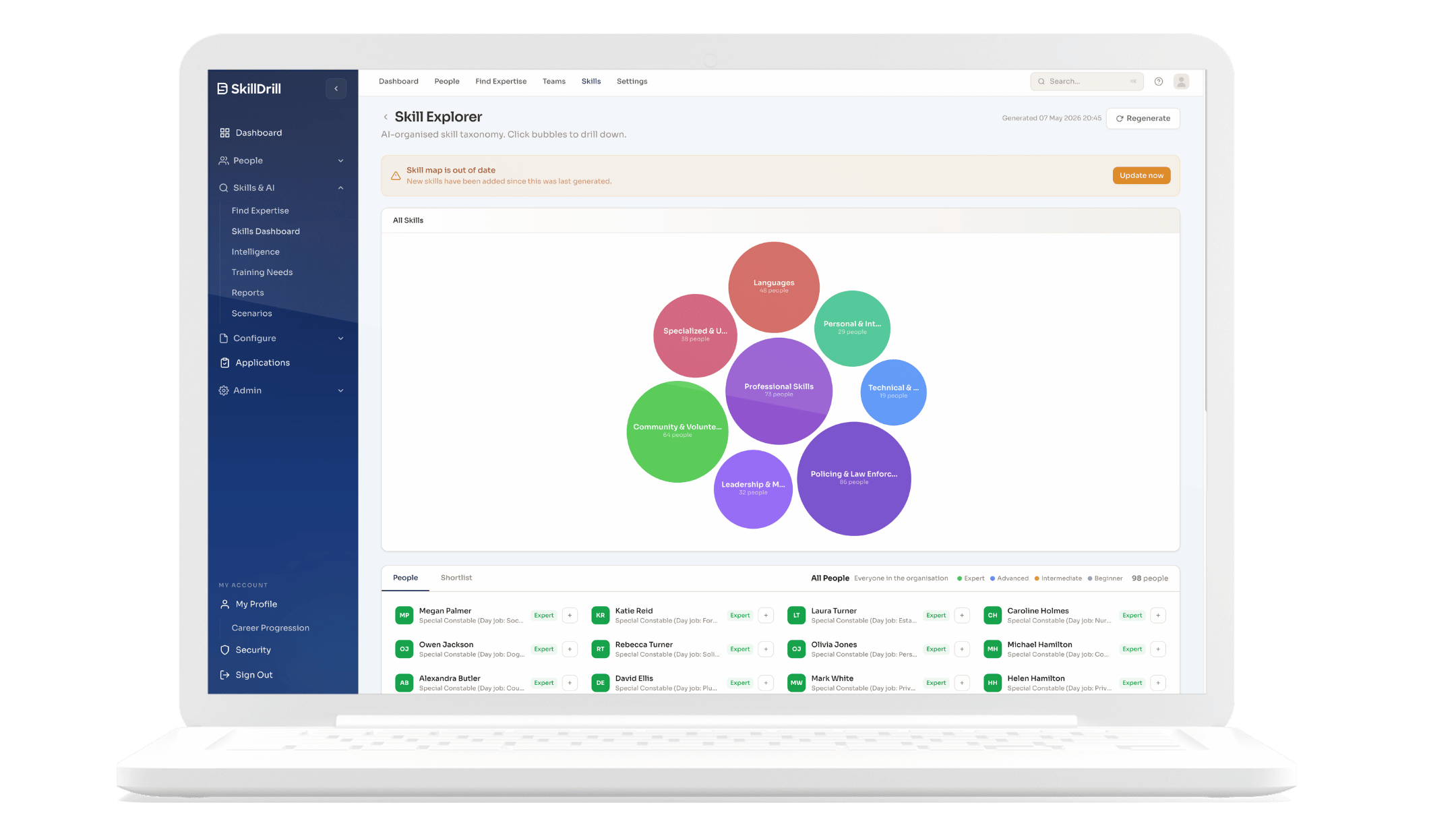
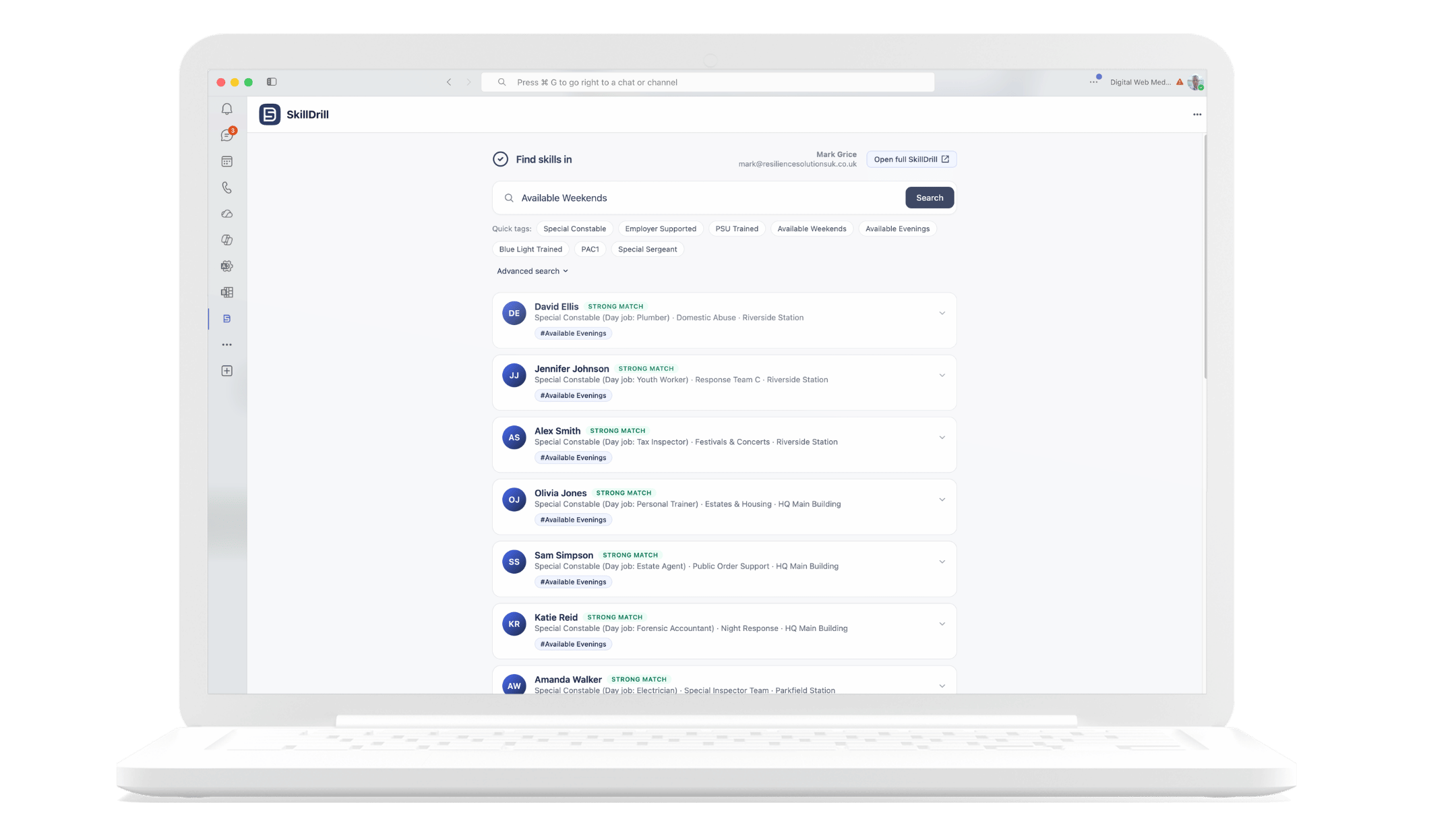
Every business has people who can do far more than the job description suggests. The senior buyer who used to lead complex IT projects. The new starter fluent in three languages. The team lead who trained as a first-aider years ago. For most organisations, none of it ends up anywhere useful. Job titles get tracked. Skills do not. So businesses pay agencies for capability they already have inside their own walls, projects get staffed without the right person in the room, and people who could be doing more never get asked.
We saw it for years. Mark, our founder, has spent more than a decade volunteering in a public sector role alongside running FullyCoded. The same observation kept coming up: skilled professionals reduced to the single function they were turning up for, with everything else they could do invisible to the organisation around them. The pattern was not unique to volunteering. We saw it in every client business we worked with too.
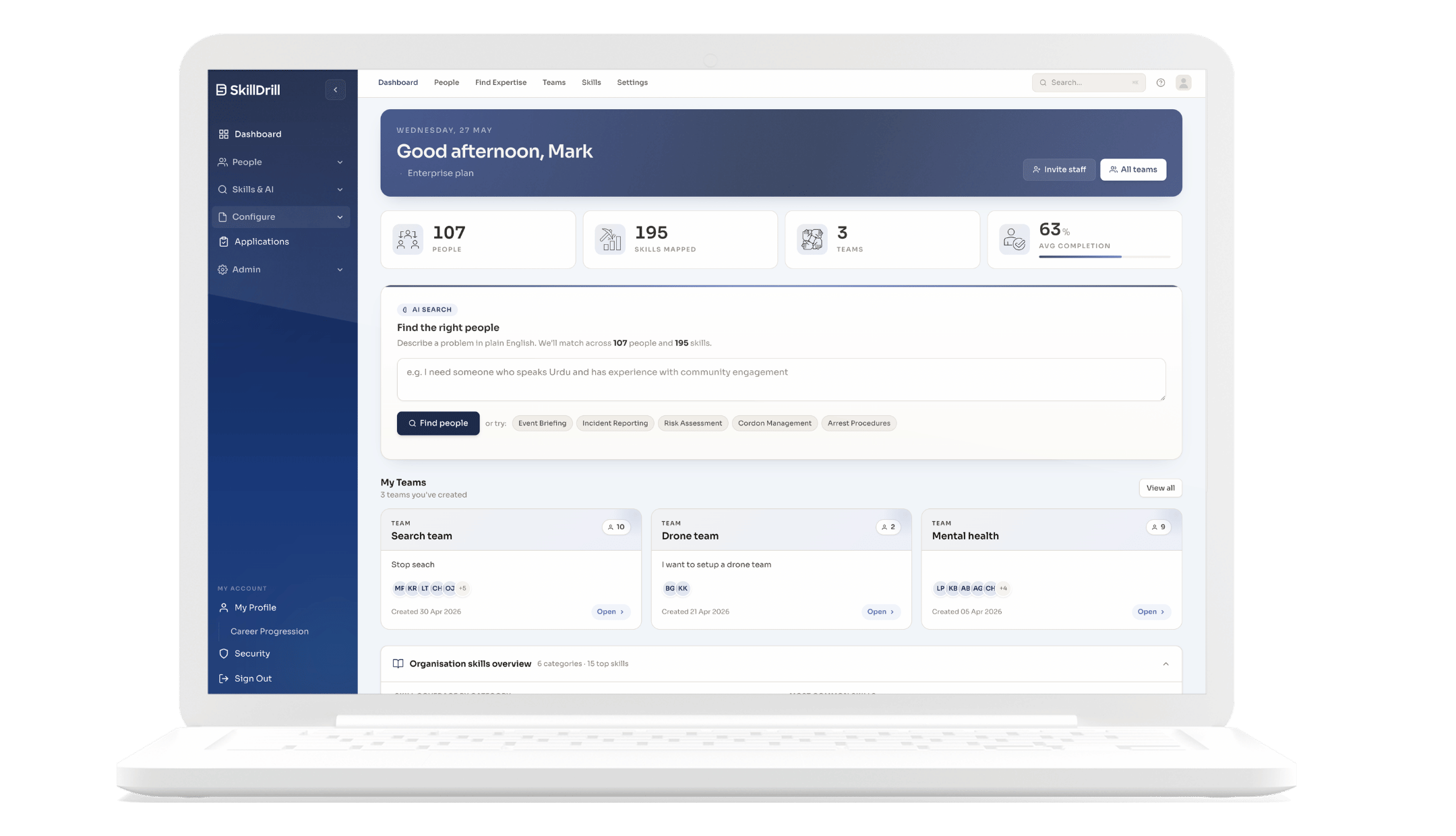
We looked for a tool that would solve it. What we found was either built for enterprise HR teams with a six-figure budget, asked too much of employees in the form of yet another self-assessment spreadsheet, or used a generic skills taxonomy lifted from a textbook that bore no relation to how the business actually worked. So we built it ourselves. SkillDrill started as a way to surface real capability inside organisations, and now runs as a multi-tenant SaaS product covering application, onboarding, internal mobility and succession through a single dashboard.
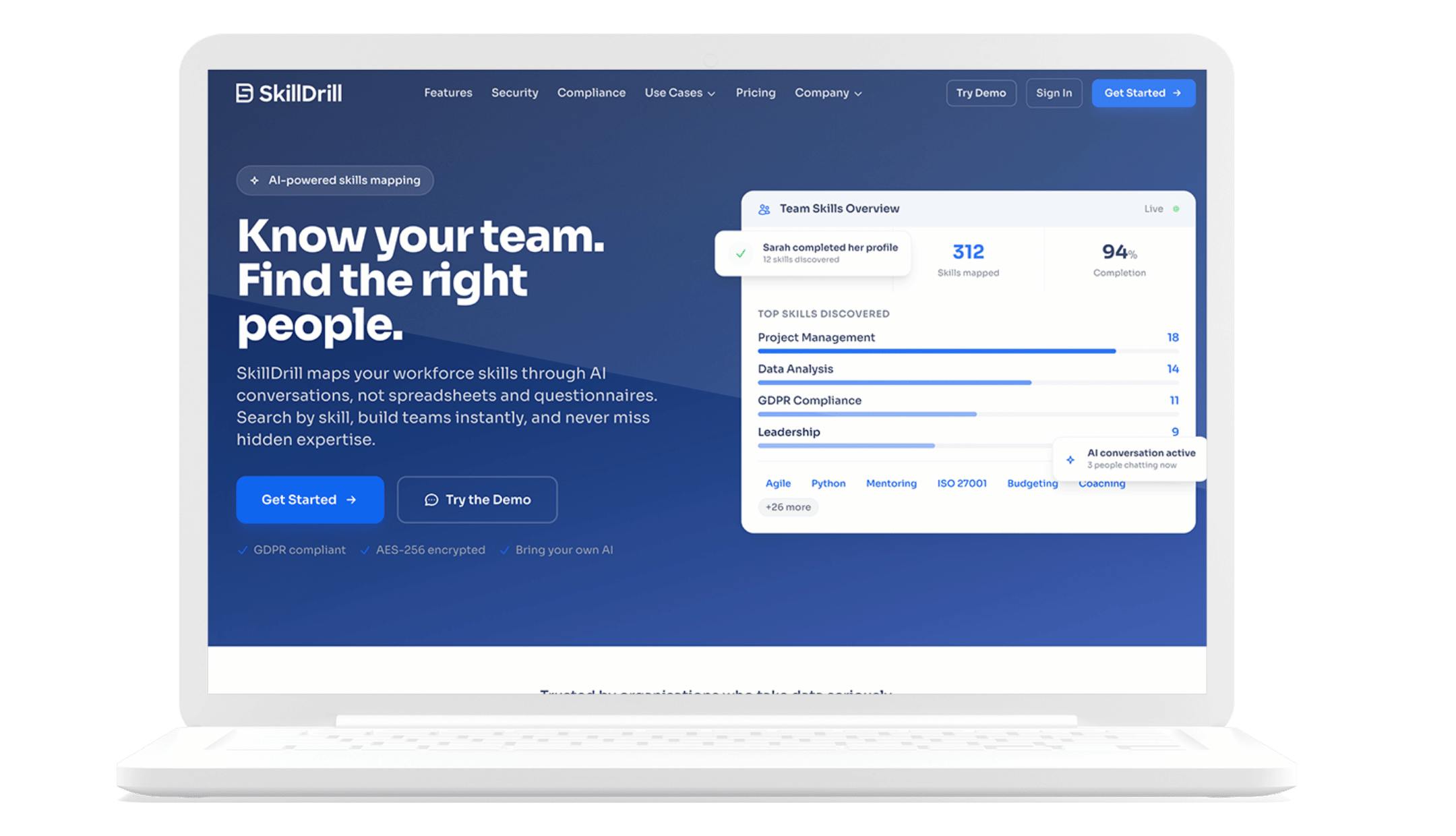
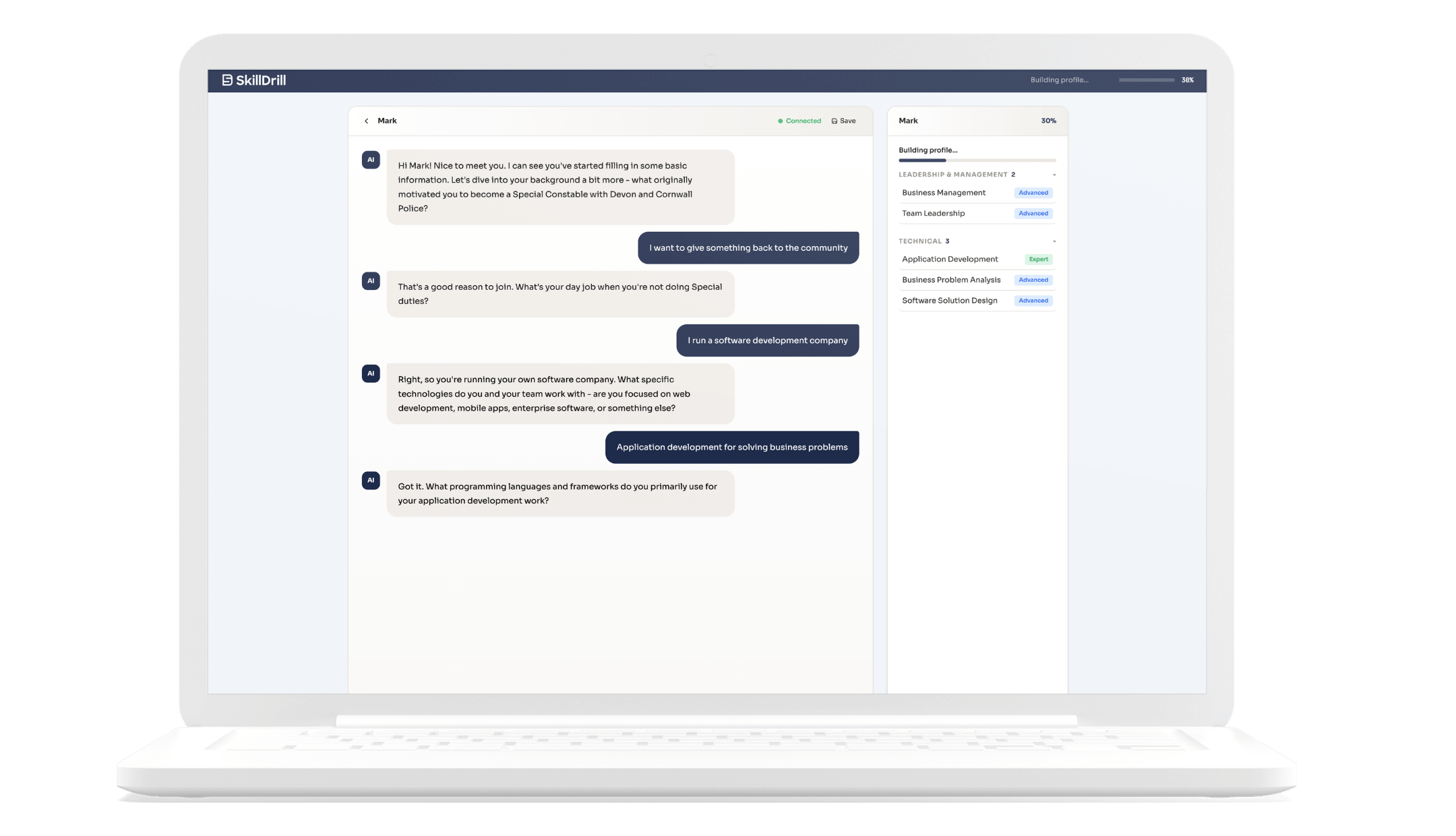
The result is a business that knows what it has. Instead of a one-off audit that rots in a SharePoint folder, every employee has a short conversation with a friendly AI about what they have done, what they have trained in, and what they bring from elsewhere. The platform turns those conversations into a live skills profile, calibrated against the skills the business itself needs to deliver its work. Hiring managers stop guessing. HR teams stop running spreadsheet audits. Project leads can finally answer the question “who in our organisation has done this before?”
It is also designed to look after the people on the other side of the conversation. When someone mentions stress, harassment, caring responsibilities or any other sensitive disclosure, the platform flags it for a designated human inside the organisation, typically HR, a safeguarding lead or a line manager, who decides what to do next. The AI never acts on those signals automatically and never tries to play the role of a clinician. Hiring, promotion and team decisions remain with the people who know the team.
How we built and run it
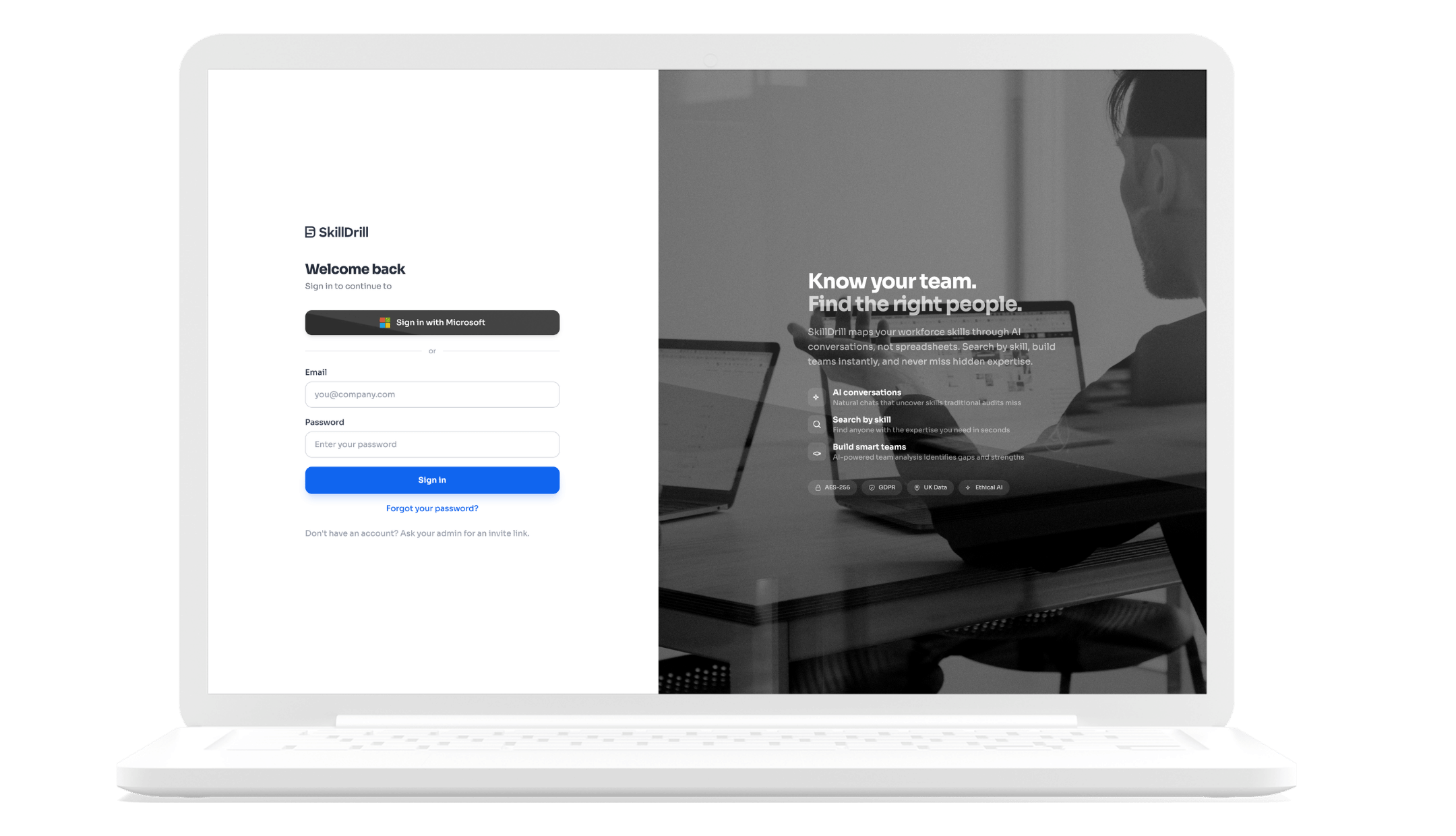
Security and data privacy were never going to be an afterthought. They are baked into the architecture from the first commit, drawing on more than a decade of secure application work we have done for other clients. The core platform runs on CodeIgniter 4 and MySQL, pragmatic, fast to ship, easy to maintain. Conversational AI runs through Anthropic on AWS Bedrock in the UK/EU region, so tenant data stays inside the bloc and is never used to train anyone’s model. Each customer’s data is isolated and encrypted at rest with AES-256-GCM, using per-tenant keys derived through HKDF, on managed MySQL with automated backups and point-in-time recovery. The application sits behind Cloudflare with WAF and DDoS protection, and on AWS. Multi-tenant session handling is subdomain-scoped, so one customer’s session cannot be replayed against another’s tenant. Microsoft Entra ID single sign-on, role-based access control with per-route permission mapping, and MFA via TOTP or email keep access tight. Stripe handles subscriptions, AWS SES handles transactional email.
SkillDrill is live at skilldrill.co.uk and now open to UK businesses for early access, from small employers through to large enterprises, as well as charities, councils, schools, NHS teams and emergency services. It is a working example of how we approach product work: identify a real problem, build something that solves it properly, run it reliably.
If you have got a problem in your business that off-the-shelf software will not fix, this is the kind of thing we build. Get in touch.